Lowell Cosmetic Dentistry Blog
Existing Patients: (978) 454-9332 | New Patients: (877) 790-5172 |
  • Blog Home
  • Main Site Home
Natural Beauty
Advanced cosmetic and general dentistry

What Can You Expect with Dental Implants If You Have Diabetes?

Posted on June 14, 2019 by AllSmiles.

Dental implants provide a long-lasting solution for missing teeth. They look and feel natural. And they function better than other forms of tooth replacement. But are they an option if you have diabetes?

Why the Concern About Dental Implants and Diabetes?

Diabetes

Uncontrolled diabetes can affect your body’s ability to heal. High blood glucose levels can cause other medical complications, including:

  • Reduce the body’s immune response
  • Increase the risk of infection, including periodontal (gum) disease
  • Delay healing

How are these factors related to dental implants?

Dental implants

Before you receive dental implants, your gums need to be healthy. Additionally, implants are surgically placed in your jawbone. Sometimes bone grafting is required before you receive them. Proper healing is vital for dental implants to be successful.

Surgery – A dentist who is trained in implantology or an oral surgeon can replace your missing teeth with dental implant fixtures—artificial tooth roots. A root form serves as an anchor for a dental crown, or cap. Two or more implant fixtures can be used to support a denture. It takes three to four months for implants and your jawbone to fuse together and heal. The result is a solid foundation for your replacement teeth.

Bone grafting – If you have begun to experience jawbone shrinkage in the areas where teeth are missing, bone grafting might be needed to ensure your implants have enough support. The grafts will need to heal for about three months before you receive dental implants.

But will diabetes prevent you from receiving implants?

What Does Research Show?

In a study published in the May 2019 issue of the Journal of Oral Implantology, researchers reviewed 118 published studies on dental implants for patients with diabetes. The findings show that diabetes does not affect the implant success rate. But it can increase the risk of marginal bone loss (resorption of bone around the dental implant). Still, with proper planning and care, most patients with diabetes have a successful outcome.

Are You a Good Candidate for Dental Implants?

If you’re thinking about getting dental implants, let your dentist know that you have diabetes. He or she will review your medical and dental history to ensure you’re a candidate for this form of tooth replacement. If you are, your dentist or oral surgeon will ensure your implant surgery is well planned for and performed at the optimal time to promote healing. Your dentist will carefully monitor your implants throughout the healing process.

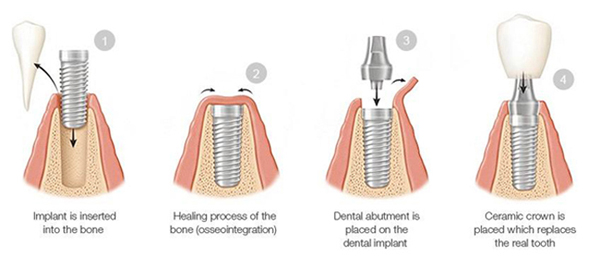
Diagram of dental implant phases, including 1) implant insertion in bone, 2) healing process, 3) abutment attachment, 4) crown attachment.

Dental implant phases

How Can You Help?

Some of the things you can do to help control your diabetes and contribute to the success of your dental implants include:

  • Follow your doctor’s instructions for monitoring and testing your blood glucose level.
  • Take your medication as prescribed, but tell your doctor about any uncomfortable or unusual side effects.
  • Ensure you get adequate nutrition and regular exercise.
  • Keep your regularly scheduled appointments for dental cleanings and exams.

If you have diabetes, dental implants can still be an option for making your smile healthier and more attractive—for a lifetime.

Finding the Right Dentist

Your smile and your oral health are worth taking time to find the right dentist for your case. Search online to find dentists who have extensive post-graduate training in implantology and who have successfully completed many implant cases. Consider scheduling consultations with at least two dentists to discuss your concerns and to learn what each dentist does to help patients with diabetes have a successful outcome with dental implants.


This post is sponsored by Michael Szarek, DMD of Lowell, MA.

Filed Under: Dental implants Tagged With: dental implants bone loss diabetes, diabetes dental implants, Lowell MA dental implants

7 Keys to Choosing a Dental Implant or a Bridge

Posted on May 30, 2019 by AllSmiles.

The root canal that I received this past March didn’t work. My dentist did a second root canal last month, but she could not save the tooth. She extracted it. The tooth is a right lateral incisor, so I have a tooth missing in the front of my mouth. It’s there for everyone to see. I’m debating on whether or not to get a dental implant or a bridge. An implant costs so much, but my dentist said it could last for the rest of my life. And then I’m not sure if my dentist knows how to handle complex cases. She is young, and this is only her fourth year in practice. I’m four hours away from Dr. Szarek’s office. Otherwise, I would come there. Can you give me some things to consider before I say and make a commitment to the wrong dentist? Thanks. Teresa

Teresa – Below are a few things to consider.

Dental Implants

  • Surgery – Minimally invasive surgery is required to place implant fixtures in your jawbone.
  • Healing time – It takes several weeks for the implant to fuse to your jawbone.
  • Effect on adjacent teeth – No work is required on your adjacent teeth.
  • Cost – Dental implants cost more than other forms of tooth replacement, including a dental bridge.
  • Long-term results – Depending on your age, implants can last a lifetime.
  • Effectiveness – They look and feel like your natural teeth.
  • Bone shrinkage – Implant fixtures stimulate the jawbone and prevent shrinkage.
Diagram of dental implant phases, including 1) implant insertion in bone, 2) healing process, 3) abutment attachment, 4) crown attachment.

Dental implant phases

Dental Bridge

  • Surgery – No surgery is required to place a dental bridge.
  • Healing time – There is no healing time, so your dentist can place the implant right away.
  • Effect on adjacent teeth – Your dentist will shave down the tooth on either side of the missing. The adjacent teeth will serve as anchors for the bridge, and a dental crown will be placed over each of them.
  • Cost – A bridge doesn’t cost as much as a dental implant. In some cases, a dental implant can cost twice as much.
  • Long-term results – A dental bridge can last 10 to 20 years.
  • Effectiveness – Dental crowns can be made to look like your natural teeth, but a bridge won’t feel as natural as a dental implant.
  • Bone shrinkage – A dental crown is suspended in the middle of the bridge to replace the missing tooth. But since there is no implant fixture to stimulate the bone, the beneath the crown will gradually shrink.


Whether you choose a dental implant or a bridge, find an experienced implant dentist who is also a cosmetic dentist. You will receive a quality dental implant that looks natural.

This blog is sponsored by Michael Szarek, DMD of Lowell, MA. Dr. Szarek is an implant dentist and an accredited cosmetic dentist.

Filed Under: Dental implants Tagged With: Chelmsford MA dental implants, dental implant or bridge, how long do dental implants last, how long does a dental bridge last, Lowell MA dental implants

6 Questions to Ask Yourself before Choosing Dental Implants

Posted on April 9, 2019 by AllSmiles.

If you’re reading this post, you probably know that dental implants are the most effective form of tooth replacement. That’s because they mimic natural teeth.

The components of a dental implant include:

  • Artificial root – A root form, usually made of titanium, is surgically implanted in your jawbone. It’s a simple procedure.
  • Abutment – This connector is attached to the artificial root to support a crown.
  • Dental crown – A dental crown is attached to the abutment.
Diagram of dental implant phases, including 1) implant insertion in bone, 2) healing process, 3) abutment attachment, 4) crown attachment.
Dental implant phases

Questions to Ask Yourself before Dental Implants Are Placed

1. What are the implant dentist’s qualifications?

Although many dentists offer dental implants, not all of them meet the following qualifications:

  • Post-graduate training in implantology
  • Regularly place dental implants
  • Use advanced technology, including 3-D images to ensure optimal implant placement
  • Provide natural-looking dental crowns or implant overdentures

2. What are my other options?

Dental implants are the best form of tooth replacement, but they are also the most costly. If they are not within your budget, you should be aware of the following:

  • Other options, e.g., dental bridge, partial denture, implant overdentures
  • Cost of the options
  • Longevity of your options
  • Results you can expect

3. What’s involved with getting dental implants?

Dental implants have a 98% success rate, but they require diligent oral hygiene. Ask yourself if you’re willing to do the following:

  • Brush your teeth twice daily and daily floss between them
  • Keep appointments for regular dental cleanings and checkups
  • Quit smoking or tobacco use—or avoid those habits before and after dental implant surgery to allow proper healing

4. What Are My Long-Term Goals for My Smile?

If you have multiple smile goals, dental implants can be added to the treatment plan. But timing is everything. Your dentist will let you know at what stage dental implants will be scheduled in your overall treatment. For example, if you want your teeth whitened or aligned, let you dentist know before you receive dental implants.

5. Am I Willing to Wait?

  • Surgery and healing – Receiving dental implants is a process. After the implants are placed, it takes three to four months for the implants and your jawbone to fuse and provide a solid anchor for dental crowns or dentures. Meanwhile, you will wear temporary crowns or dentures.
  • Bone grafting – If some of your teeth have been missing for an extended period, your jawbone might be shrinking. Adequate bone is needed to support dental implants. If you don’t have enough bone, grafting might be required. The grafts need to heal before dental implants are placed.

A successful outcome requires patience. Don’t expect a quick fix with dental implants.

6. Am I Willing to Consult with More than One Dentist?

Much of the success of dental implants depends on the training, skill, and experience of the dentist. We recommend that you schedule consultations with more than one dentist. Only schedule consultations with providers who have post-graduate training in implantology, years of experience in placing implants, and many patients for whom implants have been provided.

During your consultations ask each dentist about the following:

  • Advanced training and credentials
  • Years of experience
  • How many dental implant cases he or she has completed
  • Before-and-after photos of patient cases
  • Cost of the entire procedure, including surgery, bone grafting if needed, and crowns or dentures
  • How he or she ensures accurate placement (3D imaging, computer-guided placement, etc.)

Cost alone should not determine which provider you choose for dental implants. Compare all of your options and weigh them carefully.

This post is sponsored by Lowell, MA accredited cosmetic dentist Dr. Michael Szarek. Dr. Szarek’s office is convenient to the following towns:

  • Dracut, MA
  • Chelmsford, MA
  • Tewksbury, MA
  • Billerica, MA
  • Pelham, NH      
  • Westford, MA
  • Methuen, MA
  • Andover, MA
  • Lawrence, MA
  • Wilmington, MA            
  • Bedford, MA
  • North Andover, MA
  • Burlington, MA
  • Hudson, NH
  • Windham, NH

Filed Under: Dental implants Tagged With: aacd dentist Massachusetts, accredited cosmetic dentist Dracut MA, Chelmsford MA dental implants, dental implant alternatives, dental implant considerations, dental implant consultation, dental implant options, dental implant process, dental implant questions, dental implant smoking, dental implant tobacco, Dracut MA dental implants, Lowell MA dental implants, Massachusetts accredited cosmetic dentist

5 Risks of Getting Dental Implants If You Smoke

Posted on February 28, 2019 by AllSmiles.

If you’re thinking about getting dental implants to replace missing teeth, they are the most natural-looking and effective solution. People who smoke can still be candidates for dental implants, but you should know the risks involved.

1. Nicotine Narrows Blood Vessels

Nicotine causes blood vessels to narrow and limit the blood flow to organs and tissue. Sufficient blood flow is needed for proper healing around dental implants. If you smoke, the healing process can be delayed.

2. Osseointegration Is Better If You Don’t Smoke

After dental implants are placed, time is allowed for the implants and your jawbone to fuse together. The fusion, called osseointegration, makes the implants very stable—similar to natural tooth roots. Smoking interferes with osseointegration. A 2017 study published in the Journal of International Oral Health provided the following information about dental implant failure and smoking:

  • Failure is more common among smokers than non-smokers
  • Increased smoking frequency also increases the risks of dental implant failure
  • Risk of failure increases with the duration of smoking (> 10 years)

3. Nicotine Promotes Gum Disease

Nicotine binds to tooth roots and affects the health of roots, ligaments, and gum tissue. Compromised tooth roots and ligaments can decrease the stability of teeth and loosen them. Gum disease causes the tissue to pull away from teeth and create pockets where bacteria can leak in. If you develop bacteria in your gums around dental implants, healing will be difficult.

4. Smoking Suppresses Your Immune System

The placement of dental implants requires small incisions in your gum. These surgical sites need to heal properly. Your body naturally fights infection, but if you smoke, your immune system is suppressed. It will be more difficult for your body to fight infection if any bacteria get around your dental implants.

5. E-Cigs and Vaping Can Damage Gum Tissue

e-cigarettes and vaping release a high concentration of very hot aerosols and smoke in your mouth. This exposes your gum tissue to burning, dryness, and chemicals that can inhibit the healing process.

What Are Your Options?

  • Receive dental implants anyway – Many dentists and oral surgeons will still provide surgery if you smoke. They simply inform their patients of the risks. Others will recommend that you stop smoking a few weeks before implant placement.
  • Stop smoking – You can choose to stop smoking several weeks before and after implant placement. Some patients have asked their primary care doctor for help to stop smoking.
  • Temporary alternatives – If you need time to stop smoking, a partial denture or some other form of temporary tooth replacement might be available.
  • Permanent alternatives – Dentures, a dental bridge, or a partial denture are alternate forms of tooth replacement. Although they don’t last as long, a skilled cosmetic dentist can provide natural-looking results.

If you’re interested in dental implants, schedule at least two consultations with different dentists who have advanced training and experience in placing implants. In complex cases, many dentists partner with an oral surgeon for implant placement, and the dentist provides the implant crowns.

This post is sponsored by Lowell, MA implant dentist and accredited cosmetic dentist Michael Szarek, DMD.

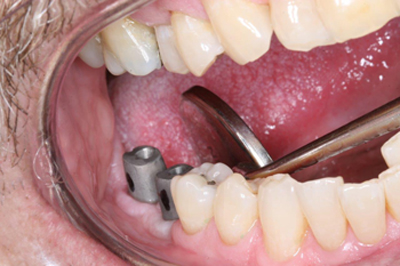
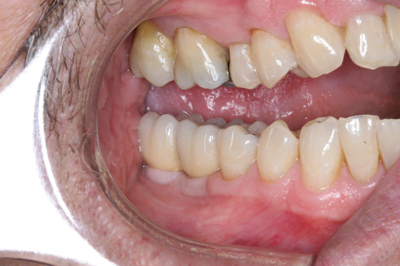
The before-and-after photos below show how Dr. Szarek places dental implants and restores them with dental crowns for natural-looking results.

  • Photo of dental implant fixtures in place of two lower right molar teeth of a patient at the Lowell, MA office of Dr. Michael Szarek.
    DENTAL IMPLANTS WERE PLACED
  • Photo of dental crowns placed on dental implant fixtures on two lower right molar teeth of a patient at the Lowell, MA office of Dr. Michael Szarek.
    IMPLANTS WERE RESTORED WITH CROWNS

Filed Under: Dental implants Tagged With: dental implant nicotine, dental implants vaping, e-cigarettes dental implants, Lowell MA dental implans crowns, Lowell MA dental implant restoring dentist, Lowell MA dental implants, Lowell MA dental implants and crowns same dentist, Massachusetts dental implants crowns, smoking before after dental implants

Should you request titanium or zirconia dental implants?

Posted on January 25, 2019 by AllSmiles.

If you need dental implants, should you request titanium or zirconia implants? Consider a few facts about your options.

Titanium Dental Implants

The first titanium dental implant was placed in 1965. Since that time, there has been extensive research on titanium implants for their efficacy and biocompatibility. Titanium is also commonly used for joint and bone replacement throughout the body.

If the desire to receive metal-free treatment is motivating your search for alternatives to titanium implants, give consideration to the reasons you really want non-metal dental implants. Certain metals are essential for human life, including:

  • Calcium
  • Colbalt
  • Copper
  • Iron
  • Magnesium
  • Manganese
  • Zinc

Although titanium isn’t essential for life, it has proven to be biocompatible with human oral tissue.

A study published in the September 2018 issue of Clinical Oral Investigations shows that the success of dental implants is largely dependent on professional maintenance and practicing excellent oral hygiene at home. Patients who received follow-up care every three months after initial placement of an implant showed minimal signs of inflammation around the implant within the first year.

What about Zirconia Implants?

Zirconia implants were first used in 2005. In 2011, they were approved by the FDA for use in the USA. Zirconia, or zirconium dioxide, is a high-strength ceramic. Its recent introduction into implantology means that less research is available than with titanium implants. Additionally, since the technology is relatively new, fewer dentists and oral surgeons place zirconia dental implants.

Zirconium implants are white, so over time, they are more aesthetically pleasing than titanium, which can show through as a dark line at the gumline. Even if you choose titanium, a skilled cosmetic dentist will ensure you receive natural-looking results.

How Do Titanium and Zirconia Compare for Oral Health?

A 2016 study published in Clinical Oral Investigations compared zirconia and titanium implants. Plaque index (PI), gingival (gum tissue) index (PD), probing depth (PD), and bleeding on probing  (BOP) were examined in dental implants that had been integrated with the bone for at least 1.2 years, but on average 2.2 years. GI, PD, and BOP were higher around dental implants than around natural teeth. But no significant difference was found between zirconia and titanium implants.

  • Photo of five dental implant screws. On both the left and right side is a single titanium implant, and three zirconia implants are between them.
    Titanium (metal) and zirconia (white) dental implants

What Should You Do?

  • Schedule consultations with at least two skilled implant dentists to discuss your concerns. At least one of the dentists should have extensive experience with zirconia implants—or partner with an oral surgeon who has the experience.
  • If you think you have metal allergies or sensitivities, schedule an appointment with an allergist to find out if titanium will present any issues.
  • Depending on the number of teeth you’re replacing with dental implants, the implants will be restored with dental crowns or dentures. Find a cosmetic dentist to provide lifelike crowns or dentures.

This post is sponsored by Lowell, MA accredited cosmetic dentist Dr. Michael Szarek.

Filed Under: Dental implants Tagged With: metal free dental implant, titanium dental implant, titanium vs zirconia, zirconia dental implant

  • « Previous Page
  • 1
  • …
  • 4
  • 5
  • 6
  • 7
  • 8
  • …
  • 13
  • Next Page »

Recent Posts

  • What Is the Best Age for Getting Porcelain Veneers? June 15, 2026
  • How Do I Know Which Type of Porcelain Veneers Are Best for Me? May 22, 2026
  • My Last Dental Cleaning Was Too Rough April 22, 2026
  • Why Are Puffy and Oozing Gums Worse Than Furcation Involvement? March 24, 2026
  • What’s the Best Treatment for a Child’s Damaged Front Tooth? February 20, 2026

Archives

Categories

  • Cavities
  • Cosmetic dentist
  • Dental bonding
  • Dental bridge
  • Dental Crown
  • Dental Implant Failure
  • Dental implants
  • Dentures
  • General dentistry
  • Gentle Dentistry
  • Gum Disease
  • Health Issues and Teeth
  • Implant overdentures
  • Mini implants
  • Oral cancer
  • Oral Health
  • Porcelain crowns
  • Porcelain veneers
  • Root Canal Treatment
  • Snap-On Smile
  • Teeth whitening
  • Tooth Trauma
  • Toothache
  • Uncategorized
  • White fillings
Welcome
You're going to love it here. We hope to see you soon.
Address
Michael Szarek, DMD
Cosmetic & General Dentistry
75 Arcand Dr
Lowell, MA 01852
Phones
Existing Patients:
(978) 454-9332
New Patients:
(877)790-5172
Information
Office Tour
Financial Options
Office hours
Monday, Thursday: 10:00am - 8:00pm
Thursday: 8:00am - 5:00pm
Wednesday: 8:00am - 5:00pm
Friday: 8:00am - 5:00pm
Reviews
Google
Yelp
Facebook

©2012-2026 Michael Szarek, DMD, MS • All rights reserved
Website Design and SEO by Infinity Dental Web IDW Copyright Logo

Menu
Michael Szarek, DMD, MS logo
Phones
  • Blog Home
  • Main Site Home
  • New Patients Click to Call
    (877) 790-5172
  •  
  • Existing Patients Click to Call
    (978) 454-9332