Lowell Cosmetic Dentistry Blog
Existing Patients: (978) 454-9332 | New Patients: (877) 790-5172 |
  • Blog Home
  • Main Site Home
Natural Beauty
Advanced cosmetic and general dentistry

Dental implant crowns make my mouth and teeth burn

Posted on October 17, 2020 by AllSmiles.

Almost two years ago, I received four implant crowns. After getting the crowns, my teeth feel dry. And the way my upper teeth hit my lower teeth was uncomfortable. My bite was heavy in places, and I developed the habit of tapping my teeth together. I’ve seen my dentist repeatedly for adjustments. Now I think that I have burning mouth syndrome. By mid-morning each day, the backsides of my front teeth are burning. I chew gum all day to keep the saliva flow going. My dentist told me that I need a gum specialist because nothing is wrong with my crowns. Another dentist gave me a second opinion and said my crowns are well-positioned. If that’s the case, why can’t I stop clicking my teeth together? I don’t know what to do next. Stephen from CT


Stephen,

Your experience gives us the impression that your dentist doesn’t have the skill and expertise to place four implant crowns all at once on upper teeth. Although Dr. Szarek would need to examine your teeth for an accurate diagnosis, we will use your description to suggest what might be happening.

How crowns affect your bite

If your upper teeth are uncomfortably hitting your lower teeth, your crowns are disrupting your bite. When a dentist places crowns correctly, your bite will feel natural and comfortable without thinking about it. But your bite immediately felt awkward and is causing you to tap your teeth together.

Referral to a gum specialist

If your bite is off and your crowns are causing the problem, a gum specialist (periodontist) is not the answer.

Second opinion dentist

Although your crowns look perfect, your bite can still be off. When dentists place multiple crowns, they must follow occlusal principles. Your teeth must meet simultaneously and be positioned to ensure tooth function is not compromised. Although you had a second opinion, we recommend getting a third opinion.

Look for a dentist who has post-graduate training in occlusion and bite. Many dental schools don’t offer enough occlusion training for dentists to understand how to place multiple crowns at once. Find a dentist with post-graduate training in occlusion, bite, or full-mouth reconstruction from at least one of these training facilities:

  • Pankey Institute
  • Dawson Academy
  • Spear Education Center
  • Las Vegas Institute

Dry teeth and burning mouth

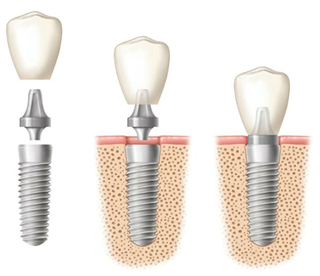
Diagram of three phases of dental implants, for information on implants and diabetes from the office of Lowell, MA dentist Dr. Michael Szarek.

Dental implant crowns can make or break yorur bite

Burning mouth syndrome might be the cause of your dry teeth and burning sensation in your mouth. The stress from your bad dental experience might be the trigger for your symptoms. According to the Mayo Clinic, stress is a secondary trigger for burning mouth syndrome.

After you find an advanced cosmetic dentist with training in occlusion and bite, you can receive implant crowns that look beautiful and function correctly. And your quality of life will improve.


Michael Szarek, DMD, of Lowell, MA, sponsors this post.


Filed Under: Dental implants Tagged With: crowns bite is off, crowns don't fit, crowns teeth click, Dawson education dentist Masachusetts, dental implant crowns, dental implants, dentist to fix my bite, implant crowns teeth burn, Massachuetts dentist occlusion, my bite is off

Root canal treatment again?

Posted on September 30, 2020 by AllSmiles.

In 2014, my dentist did a root canal on an upper right molar. Two months ago, the tooth started hurting, and it’s getting worse. Will I need an extraction and dental implant, or if I see a specialist, can they try a root canal treatment again and prevent an extraction? – Thanks. Noble R. from CT

Noble,

Root canal treatment is one of the least predictable treatments in dentistry. Even if a dentist performs the procedure correctly, it has a 5-15% failure rate.

Can Root Canal Treatment Be Repeated?

Root canal treatment can be repeated multiple times. But it doesn’t always make sense to do it. Still, there is an option before extracting a tooth and replacing it with a dental implant.

Why Causes Root Canal Failure?

Sometimes root canal treatment fails because the dentist could not completely remove the infection from a tooth. Canals in a tooth can twist and turn and make it difficult or impossible for a dentist to clean out the infection and seal out bacteria fully.

The pulp in your tooth contains living tissue, nerves, and blood vessels. A pulp chamber is in the crown of a tooth, and a pulp canal conducts blood supply and nerve in the chamber. If tooth pulp is infected, a dentist will clean out the chamber and canal and seal them to prevent bacteria from entering the tooth.

Molar teeth usually have three canals for each tooth root. But sometimes a tooth has a fourth canal that’s difficult to find and clean. Some canals have branches at right angles. A dentist has tiny, highly flexible files to insert in the tooth and remove the infected tissue, but the files cannot enter a side branch with a right angle. Although a minority of teeth have fourth canals and challenging angles, sometimes fourth canals exist and retreatment is needed. Retreatment has a 50 to 75% success rate. But if retreatment is completed by a dentist who is skilled in root canal treatment and it fails, a third treatment is likely to fail.

Root Canal Surgery

Root canal surgery is a procedure that enters the tooth through the root instead of the crown. A root canal specialist, or endodontist, performs root canal surgery, or an apicoectomy. The treatment is 50 to 75% successful. The specialist will take the following steps:

  • Make an opening in the bone
  • Cut off the root tip of the infected tooth
  • Place a small filling at the end of the tooth to seal it

But even with an apicoectomy, a specialist sometimes can’t access tooth roots, or a root’s location—such as near a nerve in the lower jaw and lip—makes surgery risky.

Extraction Instead of Repeat Root Canal Treatment?

Diagram of three phases of dental implants, for information on implants and diabetes from the office of Lowell, MA dentist Dr. Michael Szarek.

Repeat root canal treatment is an option before extraction and a dental implant

An extraction is an alternative to repeat root canal treatment. Although it’s not the first choice, sometimes even a specialist can’t save a tooth, and you’ll need an extraction and dental implant.

Schedule a follow-up appointment with your dentist to discuss your options. You can compare your dentist’s recommendation with a second opinion from a root canal specialist.

Michael Szarek, DMD, a Lowell, MA, cosmetic dentist, sponsors this post.

Filed Under: Dental implants Tagged With: apicoectomy, dental implant, extraction and dental implant, how many times can a root canal be done, repeat root canal, root canal specialist, root canal surgery, tooth extractiond, what causes root canal failure, what happens during an apicoectomy, what happens during apicoectomy, what happens during root canal treatment

If get dental implants if I’m 16 and still have baby canine teeth?

Posted on August 6, 2020 by AllSmiles.

I’m 16 years old, and my upper and lower permanent canine teeth never came in. The baby teeth didn’t loosen or fall out, and the permanent ones never came in. Last December, my dentist removed the bottom teeth. The right permanent canine on the bottom was behind the primary tooth and grew almost in the right space. But the left permanent canine on the bottom is growing too close to the lateral incisor and leaving a space that looks like I have a missing tooth.

The issue with my canine teeth is leaving spaces between my teeth. I don’t want to remove the top canine teeth because I’m afraid that the permanent teeth will come up like the bottom ones and leave spaces. And then my other teeth will start moving, too. Are dental implants a solution for the spaces between my teeth? – Kerry

Kerry,

We are concerned about the situation you’ve described. If you have regular checkups, your dentist should address the problem. What you’re experiencing with your teeth is not uncommon, though. And dental schools train dentists on how to take good x-rays of your entire jaw to resolve the problem.

What Prevents Permanent Teeth from Erupting?

Often, permanent teeth don’t erupt because they are impacted. Some permanent teeth never form. Lateral incisors, lower premolars, and wisdom teeth most commonly don’t develop, but it’s rare for canine teeth not to develop. In the teenage years, when permanent canine teeth don’t erupt, it’s often because they are impacted.

If your dentist takes x-rays of your entire jaw, he’ll get answers to these questions:

  • Where are the permanent teeth?
  • Are they impacted?
  • Are they in front of, or behind, other permanent teeth?

Orthodontic treatment will help the teeth erupt in the correct position. One treatment that allows an impacted a permanent tooth to erupt is for an orthodontist to make a surgical opening in the tissue to expose it. If necessary, the orthodontist might use braces and attach a bracket to the tooth to help it erupt in the correct position. An orthodontist will also determine if there is enough room for a tooth to erupt in the right place.

Diagram of three phases of dental implants, for information on implants and diabetes from the office of Lowell, MA dentist Dr. Michael Szarek.

Dental implants need room beneath them to fuse with the bone and provide stability.

Canine teeth are anchor teeth and an essential part of your smile. It’s usually best to remove the first premolar to allow the canine to erupt. Afterward, braces can straighten the remaining teeth.

Will Dental Implants Work with Impacted Teeth?

Dental implants won’t work with impacted teeth because the teeth will block the implants. Implants require a clear path to fuse with your jawbone and remain stable. A dentist will only place implants if there are no teeth beneath them.

If your dentist can’t resolve the issue, we recommend that you get a second opinion or visit an orthodontist.

Michael Szarek, DMD, of Lowell, MA sponsors this post.

Filed Under: Dental implants Tagged With: baby canine teeth in adults, baby canine teeth in teenagers, baby teeth adults, baby teeth teenagers, braces for impacted teeth, braces for tooth eruption, dental implants, dental implants impacted teeth, dental implants teeth won't erupt, permanent teeth won't erupt, primary teeth adults, primary teeth teenagers, replace baby teeth with implants

Three Causes of Root Canal Failure and How Your Dentist Might Treat It

Posted on June 16, 2020 by AllSmiles.

My top right upper molar is sore. I had a root canal on the tooth in 2002. I first noticed slight pain about two months ago, but now the pain is more frequent and is intense sometimes. Yesterday I saw a small sore on my gum. Pus was coming out of it in the afternoon, and at the same time, the pain was more intense than usual. I’m afraid that I’m going to lose this tooth and need a dental implant. I’m hesitant about going to the dentist in the middle of a pandemic. Is there anything I can do at home to help the tooth until I’m comfortable going to the dentist? Thanks. Jordan from Richmond, VA

Jordan,

The root canal you received in 2002 failed. And that’s not normal. Root canal treatment doesn’t fail over time. Something caused it to fail.

Causes of Root Canal Failure

  • Tooth not completely sealed – If the dentist who completed the root canal treatment didn’t fully seal your tooth, bacteria can leak in, infect the tooth, and cause significant pain.
  • Untreated canals – Some teeth have canals that, without careful observation, go unnoticed. If the dentist doesn’t remove the infection from all the canals, it can linger and cause future problems.
  • Cracked root – A cracked tooth root is painful. If a dentist can save your tooth, you’ll need some form of endodontic treatment, and the tooth will be protected with a new dental crown.
Diagram of three phases of dental implants, for information on implants and diabetes from the office of Lowell, MA dentist Dr. Michael Szarek.

Dental implants fuse with the bone to provide stability.

We recommend that you schedule an appointment with an endodontist or specialist. After an examination and digital x-rays, an endodontist is skilled at accurate diagnosis or treatment options, including another root canal treatment or root canal surgery. The specialist will also explain the risks and success rates.

If there is a chance of saving your tooth, let the endodontist try to save it. If keeping the tooth isn’t an option, a dental implant is the tooth replacement option that’s closest to mimicking the look and function of your natural tooth.

Accredited cosmetic dentist Dr. Michael Szarek of Lowell, MA, sponsors this post.

Filed Under: Dental implants Tagged With: dental implant root canal failure, Lowell root canal treatment, root canal failure, root canal specialist, what causes root canal failure, will i need another root canal

Can a dentist reuse your crown after root canal treatment?

Posted on April 30, 2020 by AllSmiles.

There is decay beneath three of my five dental crowns. I need another root canal on one of the teeth. I’m wondering if it’s possible to reuse a crown after a root canal. I have a gag reflex and hate the thought of needing dental implants or dentures. I thought that when I got the crowns in 2011, I wouldn’t need another root canal. It’s disappointing that this process keeps repeating itself. Should I switch dentists? Thanks for your advice. – Harleigh from Portland, ME

Harleigh,

Whether or not your dentist can save your crowns depends on the extent of decay beneath them. Your dentist might need to cut off the crowns, which would make them impossible to reuse.

If your dentist can remove the crowns intact, it may be possible to reline them and bond them back in place.

Switching dentists probably won’t resolve the issue with decay beneath your crowns. If you frequently need crowns and get decay beneath them, several factors can help:

  • Reduce your frequency of eating and snacking throughout the day
  • Brush your teeth regularly and floss between them
  • Keep in mind that good oral hygiene isn’t a substitute for a lot of snacking
  • Keep your regularly scheduled appointments for dental cleanings and exams so your dentist can monitor your crowns
After cosmetic dentistry close-up photo of a patient's smile after receiving dental crowns to close a gap and even and brighten her teeth.

Snack less often to prevent decay beneath crowns and the need for dental implants

Neither dentures nor dental implants should be necessary if you get treatment promptly. Untreated decay will progress and eventually cause infection, which can lead to extraction and the need for a dental implant. Unless all your teeth are unhealthy and beyond saving, you shouldn’t consider dentures.

It’s best to pursue good oral health and take care of the decay beneath your crowns. Even if you need new dental crowns, they are less expensive than dental implants. And it’s worth the cost to preserve your natural teeth instead of extracting them in exchange for dentures.

Accredited cosmetic dentist Dr. Michael Szarek of Lowell, MA, sponsors this post.

Filed Under: Dental implants Tagged With: crown after root canal, dentures or dental crowns, Lowell accredited cosmetic dentist, reuse dental crown, root canal or dental implants, root canal or dentures

  • « Previous Page
  • 1
  • 2
  • 3
  • 4
  • 5
  • 6
  • …
  • 13
  • Next Page »

Recent Posts

  • Why Are Puffy and Oozing Gums Worse Than Furcation Involvement? March 24, 2026
  • What’s the Best Treatment for a Child’s Damaged Front Tooth? February 20, 2026
  • Why Does Floss Slide Under My Porcelain Veneer? January 22, 2026
  • What Happens If My Toothache Lingers After I Finish the Antibiotics? December 17, 2025
  • My Zirconia Crown, Veneer, and Natural Teeth Don’t Match November 14, 2025

Archives

Categories

  • Cavities
  • Cosmetic dentist
  • Dental bonding
  • Dental bridge
  • Dental Crown
  • Dental Implant Failure
  • Dental implants
  • Dentures
  • General dentistry
  • Gum Disease
  • Health Issues and Teeth
  • Implant overdentures
  • Mini implants
  • Oral cancer
  • Oral Health
  • Porcelain crowns
  • Porcelain veneers
  • Root Canal Treatment
  • Snap-On Smile
  • Teeth whitening
  • Tooth Trauma
  • Toothache
  • Uncategorized
  • White fillings
Welcome
You're going to love it here. We hope to see you soon.
Address
Michael Szarek, DMD
Cosmetic & General Dentistry
75 Arcand Dr
Lowell, MA 01852
Phones
Existing Patients:
(978) 454-9332
New Patients:
(877)790-5172
Information
Office Tour
Financial Options
Office hours
Monday, Thursday: 10:00am - 8:00pm
Thursday: 8:00am - 5:00pm
Wednesday: 8:00am - 5:00pm
Friday: 8:00am - 5:00pm
Reviews
Google
Yelp
Facebook

©2012-2026 Michael Szarek, DMD, MS • All rights reserved
Website Design and SEO by Infinity Dental Web IDW Copyright Logo

Menu
Michael Szarek, DMD, MS logo
Phones
  • Blog Home
  • Main Site Home
  • New Patients Click to Call
    (877) 790-5172
  •  
  • Existing Patients Click to Call
    (978) 454-9332