Lowell Cosmetic Dentistry Blog
Existing Patients: (978) 454-9332 | New Patients: (877) 790-5172 |
  • Blog Home
  • Main Site Home
Natural Beauty
Advanced cosmetic and general dentistry

3 Reasons Not to Put Porcelain Veneers Over Old Implant Crowns

Posted on March 31, 2020 by AllSmiles.

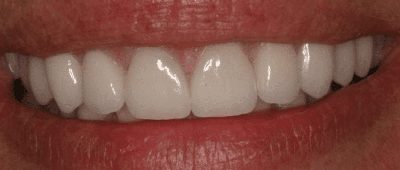
I have 15-year-old dental implants on my four center front teeth and the crowns on them are not as white as I want. I wasn’t expecting them to turn this fast. The crowns are noticeable because they are darker than my natural teeth. What do you recommend for whitening them? Thanks, Darren

Darren,
Neither you nor a dentist can whiten your implant crowns because they are colorfast. The crowns need to be replaced.

Although some companies promote whitening crowns by placing porcelain veneers over them, the process is costly. The cost of a porcelain crown and a porcelain veneer are similar, so it makes sense to replace the crown.

Why It’s Not Worth It to Veneer Old Implant Crowns

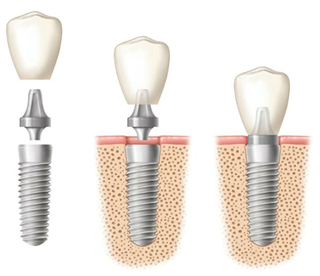
Diagram of three phases of dental implants, for information on implants and diabetes from the office of Lowell, MA dentist Dr. Michael Szarek.

Replace dull implant crowns with new ones

  1. Decay or leakage – As dental crowns age, there is an increased risk of decay or leakage beneath them. It’s to your advantage for a cosmetic dentist to remove the crowns and check beneath them for stain or decay. The dentist can also check around the dental implant sites to ensure they are still stable and healthy.
  2. Difficulty with the bonding technique – Bonding a new porcelain veneer onto an old implant crown isn’t easy. It’s difficult to get a firm bond, and it doesn’t last long—perhaps another five years.
  3. Age of your crowns – If you had the implant crowns for 15 years and they are discoloring, it’s not worth it to try to patch them up. You’ll spend a lot of money to have veneers bonded to them when they really need to be replaced.

Advanced cosmetic dentists work with a master ceramist to craft natural-looking crowns. Find an accredited cosmetic to replace your crowns and ensure they match your surrounding teeth. But before you receive crowns, ensure your natural teeth are as white as you want them. If you want to brighten your entire smile, complete whitening treatment first. Your dentist will provide crowns to match your white smile. Don’t waste time and money trying to salvage old, discolored dental implant crowns.

Accredited cosmetic dentist Dr. Michael Szarek of Lowell, MA sponsors this post.

Filed Under: Dental implants Tagged With: decay beath crowns, dental implant crowns, porcelain veneer over dental crown, replace implant crowns, whiten implant crowns

3 Things to Know About Dental Implants and Playing Contact Sports

Posted on January 14, 2020 by AllSmiles.

I am an avid soccer player. Last November, I received a dental implant because I lost a front tooth when I was playing goalie and collided with another player. I found a dentist online, went to the office, and asked for an implant. I had the surgery in early November, and everything is going well so far. It’s healing, and I am waiting for a permanent crown. Yesterday, I spoke with my cousin, who is in dental school in CA. She told me that I shouldn’t have asked for an implant. She said that if I continue to play soccer and have another accident that affects the same tooth, I will have huge problems with the implant. She is only in dental school, so I need another opinion. Is it too late to get the implant removed and get a dental bridge instead? – Jordan from South Portland, ME


Jordan – Your cousin’s concern is valid. If you experience an impact to the same tooth, the implant can be knocked out of your jawbone, damage the bone, and require bone grafting.

Your implant surgery was in November, so there is no need to remove the implant fixture now. Your jawbone is in the process of fusing with the bone. A dental bridge requires preparing each tooth adjacent to the missing one. The bridge connects the teeth, so if you receive impact again, those teeth would be at risk for significant damage.

Are Dental Implants a Good Option If You Play Contact Sports?

Diagram of three phases of dental implants, for information on implants and diabetes from the office of Lowell, MA dentist Dr. Michael Szarek.

Dental implants fuse with the bone to provide stability. But repeated and strong impact to your mouth can dislodge it.

If you’re an avid boxer or play, soccer, hockey, football, or other high-contact sports, talk with your dentist about the best form of tooth replacement.

Ideally, when you’re active in sports:

  1. A dentist can provide you with a removable dental flipper to replace the missing tooth.
  2. You can remove the flipper while you’re playing sports and wear a mouthguard to protect your mouth and teeth.
  3. Get a dental implant when you’re no longer an avid player of impact sports.

What Can You Do Now that You Have an Implant?

You’ve already received an implant, so talk to your dentist about your concerns and order a custom mouthguard to provide maximum protection while you’re playing sports. Limit or avoid soccer-playing while the artificial tooth root is healing. Allow time for it to stabilize by avoiding activities that can cause an impact to your face or mouth.

Michael Szarek, DMD, a Lowell, MA, cosmetic dentist, sponsors this post.

Filed Under: Dental implants Tagged With: dental implant central incisor, dental implant front tooth, dental implant vs flipper, dental implants contact sports, dental implants football, dental implants hockey, dental implants soccer

3 Things You Should Know About the Dental Implants Recovery Period

Posted on November 14, 2019 by AllSmiles.

Dental implants are highly effective in replacing missing teeth. But it takes time to get successful results. What should you expect as you recover?

1. Do’s and Don’ts

Do

  • Take ibuprofen for pain three times a day for three to four days.
  • Take anti-nausea or antibiotics as prescribed.
  • Sleep with your head elevated for three to four days to minimize swelling and pain.
  • Put gauze over the dental implant surgical site and apply pressure to minimize any bleeding. Report excessive bleeding that persists for longer than 30 minutes.
  • Minimize swelling by applying ice (20 minutes on, 20 minutes off) to the side of your face near the surgical site.
  • Eat soft, room temperature or cold foods.
  • Begin gently rinsing your mouth with warm salt water the day after surgery. Rinse every two to three hours for the first three days. For the following two weeks, rinse after meals and at bedtime.
  • Resume any prescription medications that you regularly take, unless otherwise directed by your doctor.
  • Keep your follow-up appointments to monitor your implants, teeth, and gums.

Don’t

  • Don’t exercise strenuously for the first few days after dental implant surgery.
  • Avoid brushing or floss your teeth in the area of the surgical site.
  • Avoid eating crunchy or chewy foods.
  • Don’t drink alcohol for at least 72 hours after implant surgery. It restricts blood flow and inhibits healing.
  • Don’t suck liquids through a straw. It increases bleeding and can dislodge the blood clot
  • Avoid smoking because it restricts your blood flow and slows down the healing process.
  • Don’t touch the surgical site or sutures.

2. Healing Time

Healing time includes implant surgery and bone grafting if needed.

Bone grafting

If you receive bone grafts, it will take 4 to 12months for the bone to heal and develop before you can receive dental implants. Adequate bone is needed to support implants and provide a successful outcome.

Implant surgery

It takes three to four months for your implant and jawbone to fuse. Meanwhile, you can wear a temporary crown.

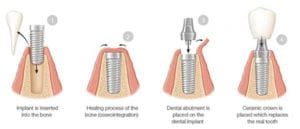
Diagram of dental implant phases, including 1) implant insertion in bone, 2) healing process, 3) abutment attachment, 4) crown attachment.

Dental implant phases

3. Permanent Teeth

After your dental implant fuses to your jawbone, a permanent dental crown will be attached to the abutment, or connector, that is placed between the implant and crown. At times, prematurely loading an implant fixture with a crown can put too much stress on it and interfere with the healing process.

Each person’s biology is different, so don’t try to rush the healing process. Allow your dentist time to ensure healing is complete so you’ll have long-lasting implants that won’t fail and need to be redone.

Michael Szarek, DMD of Lowell, MA sponsors this post.

Filed Under: Dental implants Tagged With: alcohol consumption dental implants, Chelmsford MA dental implants, dental implants abutment, dental implants diet, dental implants food, dental implants pain relief, dental implants post surgery, dental implants recovery, dental implants smoking, Lowell MA dental implants, Massachusettes dental implants

5 Reasons It’s Not Too Late for Dental Implants

Posted on September 15, 2019 by AllSmiles.

A lot of people think that it’s too late for dental implants if they’ve already been wearing dentures for many years. But what are the facts?

1. Time Doesn’t Matter

It doesn’t matter if you’ve been wearing dentures for ten months, ten years, or longer. You can still be a candidate for dental implants.

2. Delay Can Result in Dentures That You Can’t Wear

Without dental implants to stimulate your jawbone and prevent further shrinkage, over time as your jawbone continues to shrink, it won’t be possible to keep a denture in your mouth. Your dentures will progressively lift, slip around, and fall out. Dental implants can slow down the progression of bone shrinkage and improve your experience with dentures.

3. Bone Grafting Can Help

Although it’s not too late for dental implants, long-term denture wearers usually need bone grafting for several reasons:

  • Jawbone progressively shrinks when all your teeth are missing.
  • Dentures that rest on your gums accelerate bone shrinkage.
  • Grafting builds up the bone and provides support for dental implants.
  • The tissue for bone grafts can come from another part of your body or artificial bone.
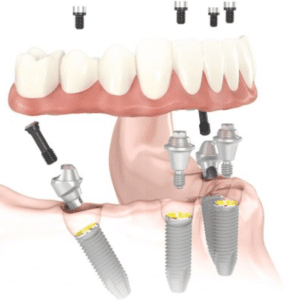
Photo of angled dental implants for information on why it's not too late for implants in Lowell, MA

Angled dental implants can eliminate the need for bone grafting

4. Angled Dental Implants Might Be an Option

All-On-4 or All-On-6 implants are placed at angles to increase contact with your bone and decrease the chance of implants becoming displaced due to lack of bone density. The technique eliminates the need to build up the bone with grafting. Your provider will tell you if it is an option for you.

5. The Right Provider Can Help

A general dentist, an oral surgeon, or a periodontist (a specialist in gum health) can perform implant surgery. Carefully select a provider who has the following qualifications:

  • Advanced training in implantology
  • Advanced technology to provide 3-D images of your oral anatomy to ensure optimal placement of the dental implants.
  • A history of dozens of successful cases of placing implants for patients with bone shrinkage


It’s not too late for dental implants. We suggest that you schedule consultations with at least two implant dentists. Each dentist should discuss your options and the results you can expect. He or she will answer your questions about this dental procedure.


Lowell, MA dentist Dr. Michael Szarek sponsors this post.

Filed Under: Dental implants Tagged With: accredited cosmetic dentist Massachusetts, dental implants, dentures dental implants, dentures for years dental implants, Massachusettes dental implants, too late for dental implant

Height Matters. What Most Patients Don’t Know About Dental Implant Abutments and Bone Loss

Posted on July 23, 2019 by AllSmiles.

An abutment is a connector that is attached to the top of a dental implant root form. A dental crown is attached to the abutment, and it replaces the part of a natural tooth that shows above your gumline.

Implant Research Shows that Height Matters

There are various widths and heights of abutments. Each patient needs an abutment that fits the implant root and helps the implant crown fit between existing teeth without being too loose or too tight. But what about abutment height?

Diagram of dental implant phases, including 1) implant insertion in bone, 2) healing process, 3) abutment attachment, 4) crown attachment.

Dental implant phases

An Implant Abutment Study

The article “Risk Factors for Bone Loss with Dental Prosthetics,” published in the June 2019 Journal of Oral Implantology, reports findings from a study of how implant abutment height affects jawbone loss. Why are the findings significant? A dental implant root, similar to a natural tooth root, stimulates the jawbone and helps prevent shrinkage. But if an abutment is too high, it can conflict with the implant root and promote bone shrinkage. Consider the findings.

The study gathered clinical data for 57 patients who received a dental implant and prosthesis between 2014 and 2018. Panoramic x-rays were used to measure several factors:

  • Patient bone levels
  • Implant height and diameter
  • Distance between tissue anchors
  • Abutment height

Researchers also analyzed whether patient age, gender, or implant characteristics contributed to the risk of bone loss.

The Results

Researchers measured the patients’ bone levels at 6, 12, and 24 months after the abutments were placed. Abutments of 4mm in height contributed to more bone loss than abutments of 3mm or 2mm in height. Taller (4mm) abutments contribute to more bone loss for several reasons:

  • Increase stress on the gum tissue around the implant
  • Cause the attached prosthesis to rotate and cause slight implant instability
  • Increase stress on the bone while chewing

The increased stress on gum tissue and jawbone can also cause irritation, infection, and soreness.

Why were 4mm abutments used? The clinical data doesn’t reveal why doctors chose specific abutment height for each patient. But author Ömür Dereci indicates that clinicians choose abutment height according to the thickness of gum tissue around the implant abutment. The recommendation: surgically reduce the gingival thickness instead of using high abutments.

If You’re Thinking About Getting Dental Implants

If you’re thinking about having your missing teeth replaced with dental implants, you can’t select the correct abutment height to prevent jawbone loss, but you can carefully select your implant dentist. Ensure your provider has the following qualifications:

  • Extensive post-graduate training in implantology, occlusion, and bite
  • Access to 3D x-ray equipment to accurately measure bone and reveal oral cavities and other structures
  • Extensive experience in implant surgery
  • Extensive experience in restoring dental implants with crowns or an arch of denture teeth

Find at least two potential providers, schedule consultations with them, and compare your options before making a final selection.


Michael Szarek, DMD, a cosmetic dentist in Lowell, MA sponsors this post. His office is convenient to Dracut, Helmsford, Tewksbury, and surrounding cities.

Filed Under: Dental implants Tagged With: Chelmsford MA dental implants, dental implant abutments, Dracut MA dental implants, how to select an implant dentist, impalnt abutment height, implant abutment bone loss, implant abutment size, Lowell MA dental implants

  • « Previous Page
  • 1
  • …
  • 3
  • 4
  • 5
  • 6
  • 7
  • …
  • 13
  • Next Page »

Recent Posts

  • Why Are Puffy and Oozing Gums Worse Than Furcation Involvement? March 24, 2026
  • What’s the Best Treatment for a Child’s Damaged Front Tooth? February 20, 2026
  • Why Does Floss Slide Under My Porcelain Veneer? January 22, 2026
  • What Happens If My Toothache Lingers After I Finish the Antibiotics? December 17, 2025
  • My Zirconia Crown, Veneer, and Natural Teeth Don’t Match November 14, 2025

Archives

Categories

  • Cavities
  • Cosmetic dentist
  • Dental bonding
  • Dental bridge
  • Dental Crown
  • Dental Implant Failure
  • Dental implants
  • Dentures
  • General dentistry
  • Gum Disease
  • Health Issues and Teeth
  • Implant overdentures
  • Mini implants
  • Oral cancer
  • Oral Health
  • Porcelain crowns
  • Porcelain veneers
  • Root Canal Treatment
  • Snap-On Smile
  • Teeth whitening
  • Tooth Trauma
  • Toothache
  • Uncategorized
  • White fillings
Welcome
You're going to love it here. We hope to see you soon.
Address
Michael Szarek, DMD
Cosmetic & General Dentistry
75 Arcand Dr
Lowell, MA 01852
Phones
Existing Patients:
(978) 454-9332
New Patients:
(877)790-5172
Information
Office Tour
Financial Options
Office hours
Monday, Thursday: 10:00am - 8:00pm
Thursday: 8:00am - 5:00pm
Wednesday: 8:00am - 5:00pm
Friday: 8:00am - 5:00pm
Reviews
Google
Yelp
Facebook

©2012-2026 Michael Szarek, DMD, MS • All rights reserved
Website Design and SEO by Infinity Dental Web IDW Copyright Logo

Menu
Michael Szarek, DMD, MS logo
Phones
  • Blog Home
  • Main Site Home
  • New Patients Click to Call
    (877) 790-5172
  •  
  • Existing Patients Click to Call
    (978) 454-9332