
Lowell Cosmetic Dentistry Blog
Existing Patients: (978) 454-9332 | New Patients: (877) 790-5172 |
  • Blog Home
  • Main Site Home
Natural Beauty
Advanced cosmetic and general dentistry

Is This Tooth Worth Saving or Should I Get an Implant?

Posted on July 17, 2026 by AllSmiles.

I’m 77 and have a dilemma about whether to get a root canal or an extraction and implant. Over the past year, many of my old fillings have failed and need to be replaced. I recently had a crown placed on my upper second molar, and during the procedure, my dentist found a cavity and a crack in the upper first molar next to it. She recommends crowning that tooth, too.

I’m concerned about needing a root canal after going through the process of getting a crown. I’m not sure whether it’s better to wait or consider a root canal now rather than needing one later. When is it better to remove a tooth instead of restoring it with a crown and, if necessary, a root canal? Thanks. Jen from RI


Jen,

Replacing missing upper molars helps maintain a healthy bite. Without replacement, even at 77, the opposing lower molars can gradually move upward into the space. The changes can affect how teeth fit together. Even if the bite remains stable, chewing on only one side of your mouth can place extra stress on the remaining teeth. It makes sense to include a replacement plan whenever extraction is considered.

How Do Implants and Root Canals Compare?

Both dental implants and root canal therapy have strong success records. However, dental implants are predictable tooth replacement options. Root canal treatment is highly successful when performed by a specialist using current techniques.

While implants have an advantage in reliability and rarely fail, treating a failed implant is often considerably more complex than treating a failed root canal. A root canal and crown usually cost significantly less than an implant and crown.

What Are the Advantages of Each Treatment?

Understanding the strengths and limitations of each option can make the decision easier.

Dental Implant and Crown

  • Costs about 50% more than a root canal and crown
  • Requires at least three months of healing before the final crown is placed
  • Has an excellent long-term success rate
  • More complex to repair if the procedure fails

Root Canal and Crown

  • Usually, it’s the more affordable option
  • Can often be completed within several weeks
  • Preserves the tooth and surrounding bone
  • Carries a slight possibility of future failure that might require an implant

It Tooth Extraction Worth It to Prevent a Root Canal?

Although there is a small possibility that a crowned tooth could require a root canal later, preserving the tooth is a priority. A more conservative approach is to restore the tooth with a crown and address a root canal only if it becomes necessary in the future. Preserving natural teeth whenever possible generally provides the greatest long-term benefit.

The information you provided does not suggest that these teeth are at high risk of needing root canal treatment. There was no mention of increased sensitivity or other symptoms that would raise concern about the health of the dental pulp.

This blog is sponsored by Lowell cosmetic dentist Dr. Michael Szarek, who has advanced training in complex restorative dentistry, and where we are welcoming our new associate, Dr. Andrea Biondo.
 

Filed Under: Dental implants Tagged With: dental implant, root canal, root canal or dental implant, tooth worth saving

Why Does My Temporary Bridge Make My Face and Jaw Hurt?

Posted on February 15, 2024 by AllSmiles.

I have had a dental bridge since 2017 that includes my lower right first premolar through my second molar. Although the bridge was still comfortable, my dentist recommended replacing it before I began to have problems. She took impressions of my mouth and placed a temporary bridge. I take ibuprofen every day because the bridge hurts. The entire left side of my mouth and jaw hurt. It hurts to speak and chew more than anything, and my gums are slightly swollen. My dentist took x-rays and said they looked okay. She cannot explain my pain. Of course, I am not allowing my dentist to order the final bridge because this temporary bridge hurts so badly. My dentist recommended an endodontist, but I do not have an appointment until early next month. Why would I suddenly need a root canal? Based on my description, why would a temporary bridge cause ongoing pain? Thank you. Kurt from NH


Kurt

Thank you for your question. One of our dentists would need to examine your bridge, teeth, and X-rays for an accurate diagnosis. However, we will explain three factors that might cause a temporary bridge to hurt.

Why Would a Temporary Bridge Hurt?

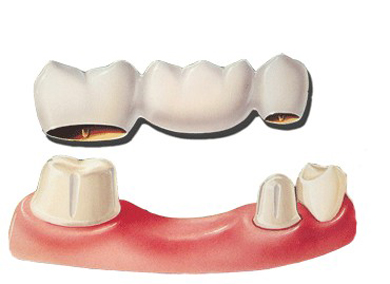
Diagram of a dental bridge

Dental bridge

A temporary bridge can hurt because your teeth are sensitive after preparation, irritated by bacteria, or the bridge is not optimal.

  • Sensitive teeth after preparation – Placing a bridge requires shaving down teeth on the sides and top so the bridge ends will fit over them. Teeth prepared for a bridge can ache and be sensitive to cold and hot temperatures, food, and drinks. Removing a bridge and preparing teeth for a new one are traumatic events.
  • Irritation from bacteria – If a dentist finds decay beneath a dental bridge or its components, bacteria could have infected and irritated your teeth.
  • Bridge position – A bridge that does not fit well can affect your bite. When you eat, the opposite teeth (upper or lower) can hit the bridge teeth harder than usual and make them ache. You can feel jaw or neck pain and get headaches, too.

Referring You to a Root Canal Specialist

When a dentist cannot identify the cause of your pain, they may refer you to a root canal specialist (endodontist). The endodontist will examine your teeth, possibly x-ray them, and test their sensitivity.

Although some dentists delay making the permanent bridge, others place it with temporary cement. It gives the dentist time to observe your teeth and see if the sensitivity resolves. An X-ray will show whether the tissue inside the tooth is infected or died and requires root canal treatment. Prompt care can help preserve the tooth, preventing the spread of an infection or the need for a dental implant.

Lowell, Massachusetts, accredited cosmetic dentist Dr. Michael Szarek sponsors this post.

Filed Under: Cosmetic dentist Tagged With: cosmetic dentist, dental bridge, dental bridge hurts, dental implant, root canal, temporary dental bridge hurts

My First Premolar Tooth Is Sensitive to Cold

Posted on July 14, 2023 by AllSmiles.

My upper left first premolar tooth is sensitive to cold and air. My dentist’s diagnosis with the air test was too fast. She did not tell me what had been causing the sensitivity. I fear an infection will affect the porcelain veneer tooth in front of it. Addison from Tacoma, WA


Addison,

Sensitivity in a tooth can be easy to diagnose, and an air test is the primary way to assess it. At other times, it is more complicated

Air Test for Tooth Sensitivity

An air test helps a dentist identify unprotected and sensitive areas. A dentist may apply a desensitizing bonding agent to coat the tooth and minimize sensitivity.

What Causes Tooth Sensitivity to Cold?

The cause of tooth sensitivity depends on several factors, including the type of pain and the tooth’s condition.

Type of pain

  1. Brief pain – Irritated tooth pulp or nerves can cause brief pain. The irritation will heal.
  2. Lingering pain – A tooth infection causes lingering pain. Your dentist may recommend root canal treatment.
  3. Pain around a tooth filling – Bacteria can leak in any space between a tooth and the filling, causing sensitivity.

Tooth condition

  1. New filling – It is normal to feel sensitivity after a new tooth filling. But if bacteria from tooth decay is left behind during the filling process, the tooth can become infected. Root canal treatment will remove the infection.
  2. Tooth decay – Decay or infection can cause sensitivity to heat or cold. It will not spread and infect your porcelain veneer tooth if a dentist catches the decay and treats it.
  3. Fracture – A fracture from trauma or wear can irritate tooth nerves and cause sensitivity. Untreated pulp damage can require root canal treatment and a dental crown.
  4. Gum recession – If your gums pull away from a tooth, it can be sensitive to cold or heat. You can use desensitizing toothpaste, or a dentist may recommend a gum graft or another technique to restore gum tissue.
  5. Worn tooth enamel – Worn tooth enamel exposes dentin (the layer beneath the enamel). Dentin contains small tubes that lead to tooth nerves that can become sensitive.

Dr. Michael Szarek, an accredited cosmetic dentist in Lowell, Massachusetts, sponsors this post.

Filed Under: Porcelain veneers Tagged With: first premolar, first premolar sensitive, infection porcelain veneer, porcelain veneers, root canal, tooth infection, tooth sensitive to cold, tooth sensitivity

Do I Need Another Flling Or a Root Canal and Crown for a Sensitive Tooth?

Posted on April 16, 2020 by AllSmiles.

Last September, my dentist filled a top left tooth with a white filling. The tooth became sensitive to anything cold that I ate or drank. I scheduled an appointment with my dentist. She examined to tooth and said I had a deep cavity. She recommended a temporary crown, although I didn’t understand her explanation for it. She told me to give it a few months, and if sensitivity continued, she would do a root canal on the tooth and give me a permanent crown.

I haven’t returned to my dentist, although the tooth is still somewhat sensitive. My sister advised me to get a second opinion. Is it possible that I don’t need a root canal and crown, or do I need a new filling? I’m not ready to schedule a dental appointment yet, but I’ve been putting off getting my teeth whitened before the issue is resolved.

Thanks, Meghan from Burlington, VT

Meghan,

Thanks for choosing Dr. Szarek’s office to answer your question

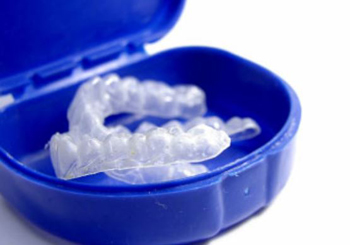
Photo of teeth whitening trays in a case, for information on DIY teeth whitening from Lowell, MA dentist Dr. Michael Szarek.

Teeth whitening can increase sensitivity in an unhealthy tooth

Your decision to delay teeth whitening is wise. The bleaching gel can cause sensitivity without a pre-existing issue. Whitening your teeth before the issue is resolved would further irritate them.

Several factors affect whether you need additional dental work for sensitivity in your tooth.

Tooth Sensitivity and How to Treat It

  • Increasing tooth sensitivity – If your tooth sensitivity is increasing, you might need a root canal treatment. What we don’t understand is why your dentist put a temporary crown on your teeth. Was your tooth cracked? If so, a dentist would cover it with a dental crown.
  • Additional dental work can make things worse – If a tooth is sensitive, further work on it can make things worse—even aggravating the living tissue inside the tooth and creating a need for root canal treatment.
  • Watch and wait – At this point, we don’t recommend a new filling, a new crown, or any additional work. Just work. Your irritated tooth nerved need time to settle down. If it begins to feel worse, call your dentist. If you’re uncomfortable with your dentist, get a second opinion.
  • If your tooth is sensitive after a filling – If you receive a composite or silver filling and later begin to feel sensitivity in the tooth, bacteria from the original decay has spread into the tooth pulp. Your body’s defenses may get rid of the infection. Otherwise, a dentist will perform root canal treatment. Although people joke about root canal treatment or refer to it in negative ways, skilled dentists make the procedure painless.

This post is sponsored by Lowell, MA accredited cosmetic dentist Dr. Michael Szarek.

Filed Under: Teeth whitening Tagged With: cold drinks sensitve teeth, cold food sensitive teeth, crown sensitive teeth, filling sensitive teeth, hot drink sensitve teeth, hot food sensitive teeth, painless root canal, root canal, root canal sensitive tooth, sensitivity teeth whitening

What Should You Do If the Only Thing That Relieves Your Toothache Is Cold Water?

Posted on December 12, 2019 by AllSmiles.

I have four fillings on molar teeth that I received 10-12 years old. I didn’t get them all at once, though. Two of them don’t bother me at all, but one of them is loose, and another tooth throbs on occasion. When the pain gets severe, I hold water in my mouth to get some relief. It’s almost as if the water pressure is soothing. Last week I started using a tooth whitening kit that I bought online. I wanted to whiten my teeth before I got the silver fillings replaced with white ones. Today, the pain in the throbbing tooth got stronger and more persistent. Am I going to have to get the fillings replaced before I finish whitening my teeth? I haven’t selected a dentist yet! Thanks. Carver

Carver,

Photo of teeth whitening trays in a case, for information on DIY teeth whitening from Lowell, MA dentist Dr. Michael Szarek.

Discontinue teeth whitening if you have a lingering toothache

You should discontinue whitening your teeth. The symptoms in your throbbing tooth indicate that the tooth pulp is dying, and you’ll need a root canal treatment for it. You also need to find a dentist to replace the loose filling before that tooth dies.

Why Does Cold Water Relieve Your Toothache?

When a patient tells us that cold water relieves a toothache, there is no doubt that the pulp (the living tissue inside the tooth) is gangrenous and has almost died. Also, when your tooth is sensitive to heat, the pulp is dying.

  • When decay gets beneath a filling, it spreads until it infects the tooth pulp.
  • The pulp becomes gangrenous, gives off gases, inflames, increases pressure inside the tooth, and causes a toothache.
  • If you cool your tooth with water, the swelling decreases somewhat and eases the pain.
  • There isn’t enough room in your tooth for swelling and infection, so if left untreated, the pulp will die.

Treating the Tooth

You’ll feel relief from the pressure tooth when your dentist creates an opening for root canal treatment. Only root canal treatment will remove the infected pulp. Your dentist will clean the tooth deep into the roots, use dental material to fill it, seal it, and protect it with a dental crown.

Teeth whitening gel will irritate your teeth and cause more inflammation and pain. After your dentist treats the issues with the infected tooth and the loose filling, you can speak with him or her about your goals for whiter teeth.

Search online for an experienced dentist and schedule an appointment right away. If you’ve delayed getting treatment because you’re anxious about dental visits, look for a gentle dentist who will help you relax.

Lowell, MA, cosmetic dentist Dr. Michael Szarek sponsors this post.

Filed Under: Teeth whitening Tagged With: cavities filled or teeth whitening first, cold water helps toothache, decay beneath filling, gangrenous pulp, gangrenous tooth, root canal, teeth whitening toothache, what is tooth pulp, when is root canal needed

Recent Posts

  • Is This Tooth Worth Saving or Should I Get an Implant? July 17, 2026
  • What Is the Best Age for Getting Porcelain Veneers? June 15, 2026
  • How Do I Know Which Type of Porcelain Veneers Are Best for Me? May 22, 2026
  • My Last Dental Cleaning Was Too Rough April 22, 2026
  • Why Are Puffy and Oozing Gums Worse Than Furcation Involvement? March 24, 2026

Archives

Categories

  • Cavities
  • Cosmetic dentist
  • Dental bonding
  • Dental bridge
  • Dental Crown
  • Dental Implant Failure
  • Dental implants
  • Dentures
  • General dentistry
  • Gentle Dentistry
  • Gum Disease
  • Health Issues and Teeth
  • Implant overdentures
  • Mini implants
  • Oral cancer
  • Oral Health
  • Porcelain crowns
  • Porcelain veneers
  • Root Canal Treatment
  • Snap-On Smile
  • Teeth whitening
  • Tooth Trauma
  • Toothache
  • Uncategorized
  • White fillings
Welcome
You're going to love it here. We hope to see you soon.
Address
Michael Szarek, DMD
Cosmetic & General Dentistry
75 Arcand Dr
Lowell, MA 01852
Phones
Existing Patients:
(978) 454-9332
New Patients:
(877)790-5172
Information
Office Tour
Financial Options
Office hours
Monday, Thursday: 10:00am - 8:00pm
Thursday: 8:00am - 5:00pm
Wednesday: 8:00am - 5:00pm
Friday: 8:00am - 5:00pm
Reviews
Google
Yelp
Facebook

©2012-2026 Michael Szarek, DMD, MS • All rights reserved
Website Design and SEO by Infinity Dental Web IDW Copyright Logo

Menu
Michael Szarek, DMD, MS logo
Phones
  • Blog Home
  • Main Site Home
  • New Patients Click to Call
    (877) 790-5172
  •  
  • Existing Patients Click to Call
    (978) 454-9332