Lowell Cosmetic Dentistry Blog
Existing Patients: (978) 454-9332 | New Patients: (877) 790-5172 |
  • Blog Home
  • Main Site Home
Natural Beauty
Advanced cosmetic and general dentistry

My teeth are still sensitive even with Sensodyne

Posted on July 15, 2021 by AllSmiles.

I’ve been using Sensodyne toothpaste for over a month because my teeth are sensitive. I have root exposure on a lot of the teeth. Sensodyne isn’t helping, though. What else can I do? I am waiting to get the sensitivity under control before I get teeth whitening from my dentist. I want in-office whitening because it is fast. And I think that if I have to whiten my teeth at home, I probably won’t finish the entire two weeks. I am forgetful. But if I need to switch from Sensodyne to another brand, that’s doable. Thanks. – Gene

Gene,

Please tell your dentist Sensodyne isn’t decreasing the sensitivity in your teeth. They can prescribe fluoride toothpaste. Try the prescription fluoride toothpaste for six weeks to determine if it will minimize the sensitivity.

Options to Decrease Teeth Sensitivity

When your teeth are sensitive, and toothpaste like Sensodyne does not work, your dentist can try other methods.

  • Fluoride varnish – Your dentist can apply fluoride varnish applied to the exposed roots. You can get varnish treatments after dental cleanings—usually every six months. Your dental insurance may not cover it.
  • Composite fillings – Your dentist can blend dental composite to match to cover the exposed roots. You will get instant relief. Dental insurance will probably provide some benefits, along with your copay. But after teeth whitening treatment, your teeth will be whiter than the composite, so depending on the length of your smile, your dentist may need to lighten the composite.
  • Gum grafting – If receding gums contribute to tooth-root exposure, your dentist may perform a graft to cover the roots and decrease sensitivity.
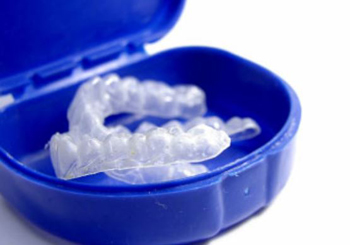
Photo of teeth whitening trays in a case, for information on DIY teeth whitening from Lowell, MA dentist Dr. Michael Szarek.

Resolve tooth sensitivity before whitening your teeth

Your dentist will discuss your options with you. Be patient and ensure the treatment gives you lasting results. Don’t rush bleaching your teeth because it can increase sensitivity in your teeth.

This post is sponsored by accredited cosmetic dentist Michael Szarek, DMD, of Lowell, MA.
Filed Under: Teeth whitening Tagged With: composite fillngs sensitive teeth, fluoride varnish sensitive teeth, gum grafting, gum grafting sensitive teeth, sensodyne teeth still sensitive, teeth whitening, teeth whitening sensitive teeth

My dentist recommended crowns instead of bonding and ruined my teeth

Posted on May 30, 2021 by AllSmiles.

I asked my long-time dentist to replace the old bonding on my tetracycline-stained teeth. My dentist convinced me that I would like the results if he removed the bonding, whitened my teeth, and placed crowns on my six front teeth. He explained that crowns are a better option because they last long and would help with my gummy smile. I listened to my dentist without knowing what was involved with crowns. Before the procedure, my dentist told me that he would have to grind my teeth a little, but my teeth looked like pegs when he finished.

My crowns look big and pasty, and in fluorescent light, you can see undertones of gray. Although my dentist said he would get the lab to correct it free of charge, the only thing different about my crown is that they look a little less gray. I got crowns at his recommendation, and he messed up my teeth! Now that I see what crowns did to my teeth, I prefer dental bonding, but I guess it is too late now. Is there anything a dentist can do with the crowns to make them look less bright and pasty? – Thank you. Bianca from RI


Bianca,

We are sorry to hear about your experience. No doubt, you trusted your dentist because you are a long-time patient.

We will review your dentist’s mistakes to help you understand how selective you must be before choosing another dentist—which we highly recommend.

Pasty-Looking Dental Crowns

Your dental crowns look pasty or chalky because your dentist does not understand how to manipulate porcelain for natural-looking translucence.

Based on your description, Bianca, at least three things went wrong:

  • Aggressive treatment – Your dentist recommended porcelain crowns because he was uncomfortable with porcelain veneers—a more conservative treatment than crowns. Porcelain veneers can last up to 20 years and are a beautiful alternative to dental bonding.
  • Limiting treatment to six teeth – At least eight front teeth—sometimes ten to twelve—show when you smile. Unfortunately, your dentist’s recommendation to treat only six teeth leaves untreated teeth exposed. And it makes it evident that you have dental crowns.
  • Not enough coverage – When a dentist does not understand the color issues related to tetracycline stains, crowns or veneers will not hide the stains. The dark color will show through. And it seems that your dentist’s attempt to lighten your teeth by bleaching them did not work at all.

Schedule a Cosmetic Dentistry Consultation

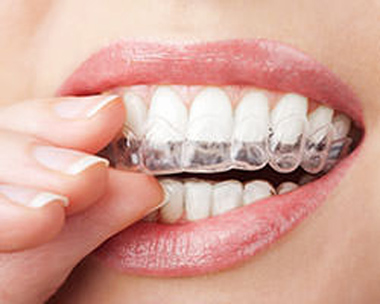
Photo of a woman's mouch with custom teeth whitening trays being placed on her teeth; from Lowell MA accredited cosmetic dentist Michael Szarek, DMD.

Only an advanced cosmetic dentist can determine if teeth whitening will help tetracycline stains

Tetracycline stains are challenging for dentists to conceal. It takes advanced cosmetic dentistry training and experience to hide the stains and keep crowns or veneers looking natural.

We recommend that you find an accredited cosmetic dentist to examine your crowns. Unfortunately, you will need new crowns to get natural-looking results. After you see the cosmetic dentist, try asking your current dentist for a partial refund at least.

Michael Szarek, DMD, an accredited cosmetic dentist in Lowell, MA, sponsors this post.

Filed Under: Teeth whitening Tagged With: cosmetic dentist tetracycline, cosmetic dentist tetracycline stains Massachusetts, crowns tetracycline stains, dental bonding tetracycline stains, teeth whitening before crowns, teeth whitening tetracycline stains, tetracycline stains second opinon

Can I avoid dental metal issues with ceramic crowns?

Posted on April 30, 2021 by AllSmiles.

For the past 12 years, I have sought natural remedies whenever possible and limit toxins in my body. I have an old dental crown that I want removed, but I am concerned about what the new crown will contain. I researched ceramic crowns and wonder if any trace of metals or lithium is in the crowns. Although I do not have known metal allergies, I am trying to protect my compromised thyroid. Also, I am considering teeth whitening before I replace the crown. But how do I find out what is in the teeth whitening gel that dentists use? Thanks for your help. – Bianca from ME


Biana,

Thank you for your inquiry. We are happy to answer your questions.

Is There Any Metal in All-Ceramic Crowns?

All-ceramic crowns do not contain metal. But it is not possible to avoid metal ions in the crowns. Every dental ceramic we are aware of contains metal ions. What is the difference?

Metal vs. Metal Ions in Dental Crowns

The information below will help you understand that although dental ceramics contain metal ions, they do not contain the type of metals commonly known to provoke reactions.

Iron

  • Iron – Iron is a metal.
  • Rust – Rust is formed when iron combines with oxygen—producing iron oxide. Although rust contains iron ions, it is not a metal.
  • Iron ions – The human body does not iron in metal form, but it does contain iron ions, which are essential to life, and the hemoglobin in our blood.

Sodium

  • Sodium – Sodium as a pure metal is toxic, but as a metal ion combined with chlorine, it becomes sodium chloride—or table salt—which is essential to life.
  • Lithium – In the same family as sodium, lithium is so reactive that it is found only in ionic form when combined with other elements.
    • Lithium disilicate is a strong ceramic that produces dental crowns, including e.max crowns.

Zirconium

  • Zirconium – It is a metal that in ionic form and combined with oxygen becomes zirconia. Zirconia crowns are high strength. Zirconia is used to build dental bridges without a metal framework.

Other Metal Ions

Other metal ions in the human body and essential to life:

  • Calcium
  • Cobalt
  • Copper
  • Magnesium
  • Manganese
  • Molybdenum
  • Potassium
  • Zinc

We are not aware of the ceramics we mentioned provoking sensitivities or an allergic reaction. Most people who are want holistic or biological dental materials choose ceramic crowns.

  • Experienced cosmetic dentists understand which dental ceramics are best for anterior, or front, teeth. And they know which ceramics to use on molar teeth to withstand the forces of chewing and grinding food.
  • Some dental crowns are layered with glass on the outside to increase the aesthetics. Glass is pure silica (silicon dioxide). Leucite glass contains aluminum tectosilicate.

What Does Tooth Bleaching Gel Contain?

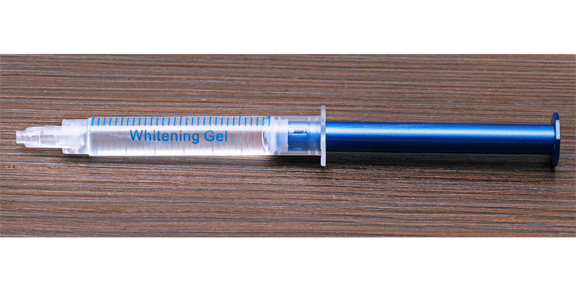
Tube of teeth whitening gelIf you are concerned about the contents of bleaching gel for whitening your teeth, ask your dentist which whitening brands they use. You can research the brands online to see the contents of the gel. It will help you determine if the contents will provoke a reaction.
Although you can ask the dental office what the bleaching gel contains, your comfort might increase if you check all the ingredients online.

One popular brand of professional bleaching gel lists these ingredients:

  • 40% hydrogen peroxide
  • 1.1% sodium fluoride
  • 3% potassium nitrate
  • a unique chemical activator

Advanced cosmetic dentists are familiar with the types of ceramic crowns available and will work with you to find a crown that meets your dental needs.

Best wishes for your ceramic crown and a brighter smile!


Michael Szarek, DMD, an accredited cosmetic dentist in Lowell, MA, sponsors this post.


Filed Under: Teeth whitening Tagged With: allergic to teeth whitening gel, biological dental materials, dental materials thyroid, dental metal, dental metal allergy, do ceramic crowns contain metal, emax dental crown, holistic dental materials, iron dental crown, metal ions dental materials, naturalpath dental materials, teeth bleaching gel hydrogen peroxide, what is in teeth whitening gel, zirconium dental crown

How can I get coffee stains off my teeth?

Posted on March 29, 2021 by AllSmiles.

I have coffee stains on my teeth from drinking coffee since I was a teenager. My hygienist says they are intrinsic stains that require professional whitening. Is this true, or is there a toothpaste I can use to at least whiten my teeth a little? Will you please explain what intrinsic stains are? Thank you. Stacie from NH

Stacie,

Thank you for your question.

Intrinsic and extrinsic stains are textbook terms that a dentist would not use with a patient without an explanation. But your hygienist is correct—coffee stains are intrinsic. We will explain the terms.

Extrinsic tooth stains

Extrinsic, or external, tooth stains are on the surface of your teeth. If you smoke or chew tobacco, stains build up on your teeth. External factors cause extrinsic stains, and you can remove them with by brushing your teeth with whitening toothpaste or with a dental cleaning. But lingering extrinsic tooth stains can penetrate your teeth and become intrinsic.

Intrinsic tooth stains

Intrinsic, or internal, stains are embedded inside teeth beneath the enamel. Intrinsic stains take years to develop. Years of drinking coffee or tea or eating staining foods like dark berries, eventually penetrate the teeth. Although toothpaste will not remove stains beneath the tooth enamel, bleaching will remove them.

How to Remove Coffee Stains from Teeth

You can remove coffee stains from your teeth with professional bleaching gel. If you have been a coffee drinker for years, the stains are in your teeth, not simply on your teeth. The professional-strength gel that dentists use penetrates your teeth and releases oxygen bubbles to break down stains.

Does whitening toothpaste work on coffee stains?

Although whitening toothpaste will remove surface stains on teeth, it cannot remove coffee stains embedded beneath your tooth enamel for these reasons:

  • The whitening agent is not potent enough for internal stains
  • The toothpaste does not stay in contact with your teeth long enough to penetrate them
  • Coffee stains are deep in your teeth—beneath the enamel

You will need professional teeth whitening from a dentist or professional strength bleaching gel and custom trays to penetrate your teeth and break up coffee stains.

Why use custom teeth whitening trays for coffee stains?

Photo of teeth whitening trays in a case, for information on DIY teeth whitening from Lowell, MA dentist Dr. Michael Szarek.

Custom bleaching trays fit your teeth precisely

Custom bleaching trays are made after a dentist takes impressions of your teeth. The trays fit your teeth only, and no one else can wear them. When you put bleaching gel in custom trays, it is sealed against your teeth for deep penetration. The trays keep the gel in contact with your teeth to blast away coffee stains. The trays also keep bleaching gel away from your gums so it will not burn them. Over-the-counter teeth whitening trays do not fit your teeth as precisely, so whitening treatment is not as effective.

Endogenous stains

Endogenous stains begin within teeth that are developing during childhood. A skilled cosmetic dentist must examine endogenous stains to determine which cosmetic treatment is best for the stains.

  • Tetracycline – Tetracycline stains are endogenous. If a child takes the antibiotic tetracycline while permanent teeth are developing, the medication will darken teeth from the inside out. Tetracycline makes teeth turn brown.
  • Genetics – Some teeth have genetically dark pigmentation.
  • Fluorosis – If a child consumes too much fluoride while their teeth are developing, a blotchy color will dominate the teeth. Bleaching fluorosis stains will make matters worse. For details about fluorosis stains, read our post, My dentist can’t remove the brown stains on my teeth.

Best wishes for a brighter smile.

Michael Szarek, DMD, an accredited cosmetic dentist in Lowell, MA, sponsors this post.


Filed Under: Teeth whitening Tagged With: berries tooth stains, endogenous toothstains, external tooth stains, extrinsic tooth stains, fluorois tooth stains, genetically dark teeth, internal tooth stains, intrinsic tooth stains, remove coffee stains teeth, smoking tooth stains, tea tooth stains, teeth whitening, teeth whitening coffee stains, tetracycline stains, tobacco tooth stains, toothpaste coffee stains

My dentist can’t remove the brown stains on my teeth

Posted on March 15, 2021 by AllSmiles.

My dentist cannot remove the brown stains on my teeth. I have a natural health practitioner, and she says the stains are from excess fluoride. My town added fluoride to the water three years ago, but I didn’t begin to notice the brown stains until July of last year. I do not drink coffee, but I drink green tea, which has fluoride, so I am switching to bottled water that does not contain fluoride. I read that porcelain veneers will work but so will dental bonding, and it is cheaper. I am now looking for a dentist for composite bonding to cover the stains. How can I find a dentist who can cover the stains without making my teeth look worse? Thanks. Hannah

Hannah,

Thank you for your inquiry. We do not understand why your dentist did cannot remove the stains on your teeth. Did your dentist try teeth whitening treatment without success? Based on your history of when the stains began, they are not fluorosis stains.

What Is Dental Fluorosis?

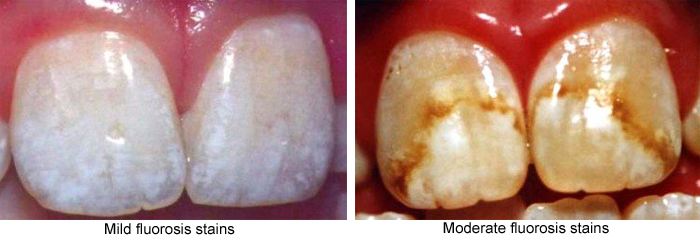
Dental fluorosis is a condition caused by excessive fluoride intake while teeth are still developing. Mottled tooth enamel is white in mild cases and brown in severe cases. After your teeth are fully developed, fluoride cannot stain them. Tooth stains that appear in adulthood are not fluorosis stains.

Mild and moderate fluorosis stains photos

If fluorosis is not the cause of tooth stains, your dentist might not recommend porcelain veneers

Types of Tooth Stains

In adulthood, tooth stains are either internal or external.

  • Internal stains – Absorbed into tooth enamel, internal stains are removed with bleaching. Pigments from dark food and drinks like berries, coffee, tea, and soda can penetrate the tooth enamel and discolor your teeth.
  • External stains – Toothpaste like Supersmile® removes the protein pellicle on your teeth. Protein pellicle is a film that naturally covers the surface of your teeth. Stains adhere to the pellicle and build up on your teeth. External stains usually appear around your gumline and between your teeth.

Treatment for Brown Tooth Stains

When brown tooth stains are not related to fluorosis, tooth bleaching is less expensive than dental bonding or porcelain veneers. Bleaching does not require applying anything artificial to your teeth. Bonding and porcelain veneers require an expert cosmetic dentist to produce results that mimic natural tooth structure, color, translucence, and gloss.

Search for an experienced cosmetic dentist and schedule a consultation to discuss your options.


Michael Szarek, DMD, an accredited cosmetic dentist in Lowell, MA, sponsors this post.


Filed Under: Teeth whitening Tagged With: brown tooth stains, causes of tooth stains, dental fluorosis, external tooth stains, internal tooth stains, tooth stains causes, tooth stains dental bonding, what causes fluorosis stains

  • « Previous Page
  • 1
  • 2
  • 3
  • 4
  • …
  • 13
  • Next Page »

Recent Posts

  • My Last Dental Cleaning Was Too Rough April 22, 2026
  • Why Are Puffy and Oozing Gums Worse Than Furcation Involvement? March 24, 2026
  • What’s the Best Treatment for a Child’s Damaged Front Tooth? February 20, 2026
  • Why Does Floss Slide Under My Porcelain Veneer? January 22, 2026
  • What Happens If My Toothache Lingers After I Finish the Antibiotics? December 17, 2025

Archives

Categories

  • Cavities
  • Cosmetic dentist
  • Dental bonding
  • Dental bridge
  • Dental Crown
  • Dental Implant Failure
  • Dental implants
  • Dentures
  • General dentistry
  • Gentle Dentistry
  • Gum Disease
  • Health Issues and Teeth
  • Implant overdentures
  • Mini implants
  • Oral cancer
  • Oral Health
  • Porcelain crowns
  • Porcelain veneers
  • Root Canal Treatment
  • Snap-On Smile
  • Teeth whitening
  • Tooth Trauma
  • Toothache
  • Uncategorized
  • White fillings
Welcome
You're going to love it here. We hope to see you soon.
Address
Michael Szarek, DMD
Cosmetic & General Dentistry
75 Arcand Dr
Lowell, MA 01852
Phones
Existing Patients:
(978) 454-9332
New Patients:
(877)790-5172
Information
Office Tour
Financial Options
Office hours
Monday, Thursday: 10:00am - 8:00pm
Thursday: 8:00am - 5:00pm
Wednesday: 8:00am - 5:00pm
Friday: 8:00am - 5:00pm
Reviews
Google
Yelp
Facebook

©2012-2026 Michael Szarek, DMD, MS • All rights reserved
Website Design and SEO by Infinity Dental Web IDW Copyright Logo

Menu
Michael Szarek, DMD, MS logo
Phones
  • Blog Home
  • Main Site Home
  • New Patients Click to Call
    (877) 790-5172
  •  
  • Existing Patients Click to Call
    (978) 454-9332